


A dead battery doesn’t have to ruin your day. With a portable jump starter you can be moving again in under five minutes — no second car, no flagging down a stranger. Here’s how to do it safely, plus how to tell whether you just have a flat battery or something bigger.
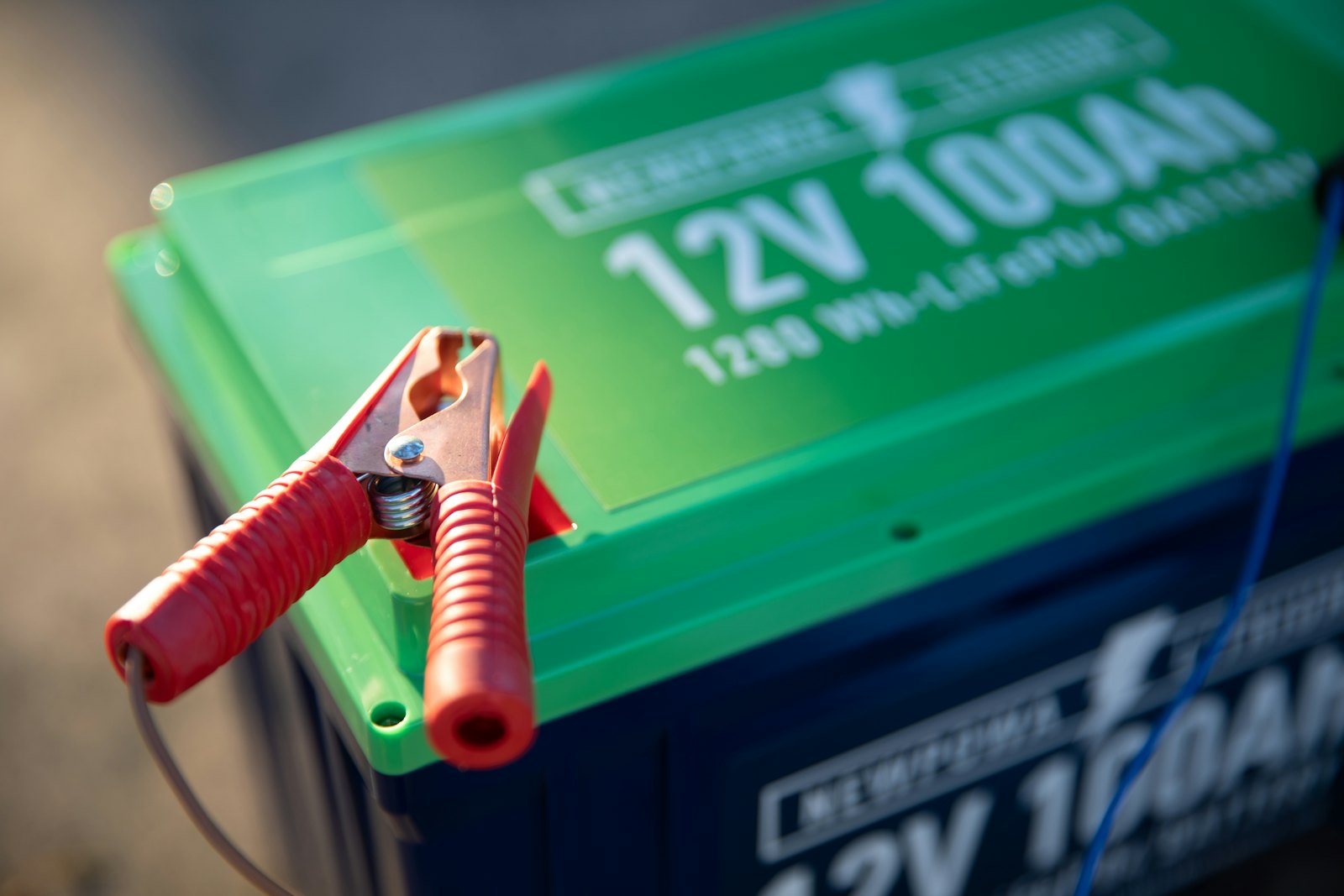
What you need
The easy answer is a portable lithium jump starter — a pocket-sized pack that clamps to your battery and cranks the engine on its own. A solid all-around pick is the NOCO Boost jump starter, which has spark-proof, reverse-polarity-protected clamps so you can’t damage anything by hooking it up backward. To match the amperage to your engine, see our guide to the best portable jump starters.
No jump pack? A set of jumper cables and a running donor car works too — just follow the clamp order carefully below.
Step-by-step: how to jump-start a car
- Park and power down. With a jump pack you only need the dead car. With cables, bring a running donor car nose-to-nose (cars not touching), both in Park, parking brakes set, ignitions off.
- Connect positive (red) first. Clamp red to the dead battery’s + terminal. With cables, clamp the other red to the donor’s +.
- Connect negative / ground. With cables, clamp black to the donor’s –, then the last black to a clean unpainted metal ground on the dead car’s engine — not its battery’s negative post. With a jump pack, clamp black to a ground point per its manual.
- Start it. Turn the jump pack on (or idle the donor car a minute), then start the dead car. Slow crank? Wait a couple minutes and retry.
- Disconnect in reverse. Once running, remove the clamps in reverse order — ground first — without letting clamps touch.
- Drive to recharge. Run the engine 20–30 minutes so the alternator tops the battery back up.
Flat battery, or something else?
This is where it helps to actually see what your electrical system is doing. AXLY.pro is a free iPhone app that pairs with a Bluetooth OBD2 adapter and reads live battery and charging voltage:
- A healthy battery reads about 12.6V at rest (engine off).
- With the engine running, it should climb to roughly 13.8–14.7V — that’s the alternator charging. If it doesn’t, the alternator (not the battery) is your problem, and you’ll be stranded again soon.
- AXLY also reads low-voltage trouble codes like P0562/P0563 and can explain what they mean for your specific car.
So after a jump, a 30-second check tells you whether you just needed a charge or you’re shopping for an alternator. Download AXLY.pro free on the App Store.
Don’t want to rely on a stranger next time? Keep a portable jump starter in the trunk — it’s the cheapest insurance against a dead battery, and it charges your phone too.